
The public question after an egg recall is usually immediate and personal: what to do if you ate recalled eggs, and whether salmonella prevention now means calling a clinician, checking a carton code, or throwing food away. That anxiety is real, but the more consequential regulatory question in the 2025 recalls is how investigators knew which eggs belonged in the recall at all.
In the June 2025 investigation, FDA reported 134 illnesses, 38 hospitalizations, and 1 death linked to Salmonella Enteritidis in eggs; three environmental samples collected at August Egg Company tested positive for Salmonella Enteritidis and matched clinical isolates from sick people by whole genome sequencing. In the August 2025 investigation, FDA reported 105 illnesses and 19 hospitalizations, again with whole genome sequencing connecting the outbreak strain to environmental samples from August Egg Company.[1][2]
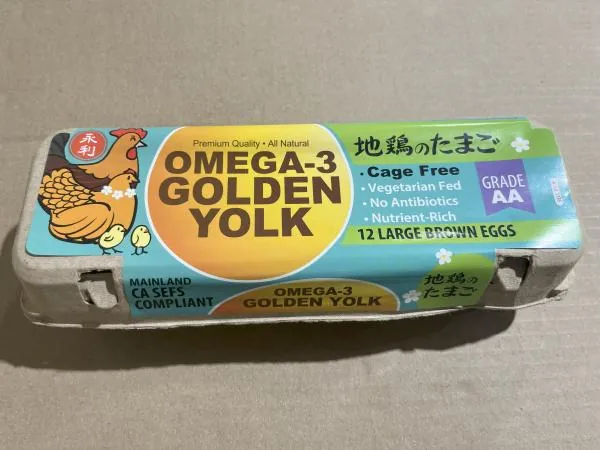
That match is the hinge. A recall can be broad because a product category looks suspicious, or it can be precise because environmental isolates and patient isolates are genetically close enough to support a traceable link. The 2025 egg recalls belong in the second category. The operational work was not a vague artificial intelligence success story; it was sampling, sequencing, comparison, case reporting, and agency action.
For consumers, the boundary remains straightforward: recalled eggs should not be eaten, sold, or served, and anyone who ate them and develops concerning symptoms should seek medical advice through ordinary clinical channels. This article is not a substitute for individual diagnosis or treatment. The point here is different: the same recall notice that tells a household what not to eat also reveals the surveillance machinery that made the notice defensible.
The recall became sharper when the evidence became genomic
Whole genome sequencing does not make a farm clean, and it does not by itself explain why contamination occurred. Its value is narrower and stronger: it can show whether bacteria found in one place are closely related to bacteria found in sick patients. In the June recall, FDA’s report says environmental samples from August Egg Company matched clinical isolates from people in the outbreak. In the August recall, FDA again described environmental findings that matched the outbreak strain.[1][2]
That kind of match changes the confidence level of a regulatory response. Investigators are no longer relying only on interviews about what people remember eating or on distribution records showing where eggs might have traveled. Those tools still matter, but genomic evidence adds an independent line of comparison between the production environment and human illness.
It also changes the accountability trail. Someone had to collect the environmental samples. Someone had to sequence the isolates. Someone had to maintain the database where the comparison could be made. Someone had to decide whether the relationship was strong enough to support public action. The visible recall is the last page of a much longer file.
This is where FDA’s technology story is most persuasive. The agency’s GenomeTrakr network is not just a slogan for modernized food safety; FDA describes it as a distributed network of laboratories using whole genome sequencing to identify pathogens and connect illnesses, foods, and facilities. FDA says GenomeTrakr has contributed to more than 1,643 consumer protection actions since 2013.[3]
That number should be read carefully. It does not mean GenomeTrakr prevented 1,643 outbreaks, and it does not prove that sequencing alone caused each action. It does show that the network has moved beyond pilot status. It is embedded in the regulatory workflow often enough that FDA can point to a long record of actions in which genomic evidence helped protect consumers.
GenomeTrakr is infrastructure before it is innovation
The most useful way to understand GenomeTrakr is not as an artificial intelligence product but as surveillance infrastructure that AI-enabled systems can later use. Sequencing produces comparable pathogen data. Networks make those data visible across laboratories. Case reports and environmental investigations give the sequences meaning. Without that older scaffolding, a match is just a pattern looking for context.
The 2025 egg recalls show why this distinction matters. A model might flag a product, region, or firm for closer attention. A genomic network can help determine whether a particular strain found in a facility is the same strain appearing in patients. Those are different regulatory claims. Prediction points investigators toward a possibility; sequencing can help confirm a relationship after specimens and samples exist.
| Regulatory function | What it can support | What it cannot prove by itself |
|---|---|---|
| Whole genome sequencing | Links between patient isolates, food isolates, and environmental isolates | The full source, route, or timing of contamination |
| Predictive analytics | Prioritization of inspections, imports, products, or signals | That illness has occurred or that a specific firm caused it |
| Nontraditional data mining | Early clues from reviews, complaints, or purchasing signals | Representative population burden or confirmed etiology |
| Traditional active surveillance | Consistent measurement of diagnosed infections across defined sites | Real-time precision about every contaminated product |
The stronger technology claim, then, is not that AI replaces investigation. It is that modern food safety systems can shorten the distance between a suspected outbreak and a defensible regulatory action when sequencing, reporting, and inspection records are already in place.
FDA’s blueprint moves from matching toward prediction
FDA’s New Era of Smarter Food Safety Blueprint is more ambitious than genomic matching. In Core Element 2, the agency commits to smarter tools and approaches for prevention and outbreak response, including expanded use of artificial intelligence and machine learning for predictive analytics, screening of imported foods at ports of entry, and mining nontraditional data sources such as online reviews and retail-level signals.[4]
That is a larger shift in regulatory posture. Instead of waiting for confirmed illnesses and then tracing backward, FDA wants systems that can assign risk earlier: which shipments deserve extra scrutiny, which firms should be inspected sooner, which consumer signals are worth investigating before an outbreak is fully visible.
The distinction between those uses matters. AI screening at ports of entry is a triage tool. Mining online reviews is a signal-detection tool. Predictive analytics for inspections is a prioritization tool. None of these is the same as an epidemiologic confirmation system, and none carries the evidentiary weight of a WGS match between environmental samples and clinical isolates.
An industry analysis published by IFT in June 2026 organizes food safety AI into five functions: Sense, Detect, Predict, Decide, and Prove.[5] The framework is useful as vocabulary, not as law. It helps separate passive data collection from active detection, forecasting, decision support, and documentation. But the categories should not be mistaken for FDA’s own validation standard.
The predictive evidence is promising, but narrower than the marketing language
Research outside FDA operations shows why agencies are interested in machine learning. One peer-reviewed study using Chinese surveillance data reported that gradient boosting decision tree models predicted Salmonella and three other foodborne pathogens with 69% accuracy.[6] That is a useful benchmark for what structured surveillance data may allow. It is not evidence that FDA can predict U.S. egg-related Salmonella outbreaks at that accuracy, and it is not evidence that such a model was used in either 2025 recall.
The same caution applies to large language model work on foodborne illness signals. A UK Health Security Agency study tested whether LLMs could help identify gastrointestinal illness in restaurant reviews and found the approach feasible, while also noting practical problems including data access, spelling variation, and misattribution.[7] Those are not minor footnotes. If a review says a person felt sick after a meal, the system still has to distinguish timing, exposure, pathogen, and coincidence.
These tools may be very useful for deciding where to look first. They are much less useful if treated as substitutes for the laboratory, epidemiologic, and field-investigation systems that establish what actually happened.
The FoodNet scaleback is the harder test
The tension in 2025 was not that FDA used advanced tools. The tension was that advanced tools were expanding while a major traditional surveillance system was contracting. CIDRAP reported that, as of July 1, 2025, CDC’s Foodborne Diseases Active Surveillance Network scaled back active surveillance from eight pathogens to two: Salmonella and Shiga toxin-producing E. coli. Campylobacter, Cyclospora, Listeria, Shigella, Vibrio, and Yersinia reporting became optional.[8]
FoodNet and GenomeTrakr answer different questions. GenomeTrakr is powerful when isolates exist and can be compared. FoodNet has historically helped estimate the burden and trends of laboratory-diagnosed infections across defined surveillance sites. A prediction system may help prioritize attention, but it does not automatically preserve the denominator, continuity, or pathogen breadth that active surveillance provides.
The July 2025 change does not erase Salmonella surveillance; Salmonella remained one of the two pathogens retained for active reporting.[8] That matters for an article centered on egg recalls. But the contraction still raises a governance problem for food safety modernization: if the broader surveillance base narrows, how will agencies validate the AI systems that are supposed to detect or predict emerging risks across a wider food system?
A model can improve if it receives better data. It can also become more brittle if the data environment around it loses coverage, consistency, or independent checks. Optional reporting may still produce valuable information in states that continue it, but optional systems do not carry the same national interpretability as a consistently maintained active surveillance program.

Agentic AI makes the validation question sharper
By December 2025, Civil Eats reported that FDA was deploying “agentic” AI for safety review tasks, describing systems capable of more autonomous decision-making than conventional analytics tools.[9] That report is worth noting, but it should be weighted appropriately: it is single-source reporting, not an FDA validation study, and it does not establish how such tools affect outbreak investigations or recall decisions.
The policy issue is not whether autonomy is inherently unsafe. Food safety regulation already depends on automated flags, statistical thresholds, and prioritization systems. The issue is what evidence regulators will require before an AI system changes the order of inspections, the treatment of imports, the interpretation of complaints, or the urgency of a recall.
For a WGS-supported recall, the evidentiary chain can be inspected: sample, isolate, sequence, comparison, case link, regulatory decision. For a predictive or agentic system, the chain must be just as inspectable in a different way: training data, feature selection, performance by pathogen and commodity, false-negative consequences, human review points, audit logs, and comparison with surveillance baselines.
The 2025 egg recalls show progress, not replacement
The June and August 2025 egg recalls are a strong case for genomic modernization. FDA could point to environmental samples and clinical isolates that matched by whole genome sequencing, and those matches supported more confident recall investigations than interviews and distribution records alone could have supplied.[1][2]
They are a weaker case for treating AI as an all-purpose replacement for surveillance. GenomeTrakr works because laboratories, investigators, public health agencies, and reporting systems feed it usable evidence. Predictive analytics may help target resources, and nontraditional data mining may surface earlier signals, but those tools still need independent ways to measure what they miss.
The unresolved question is therefore not whether FDA should use AI in food safety. The 2025 recalls show that technology-assisted detection can make outbreak response more exact. The unresolved question is what proof regulators will require before AI-driven systems are allowed to substitute for surveillance programs they did not replace on their own.
References
- Outbreak Investigation of Salmonella Enteritidis: Eggs, June 2025, FDA.gov.
- Outbreak Investigation of Salmonella Enteritidis: Eggs, August 2025, FDA.gov.
- GenomeTrakr Network, FDA.gov.
- New Era of Smarter Food Safety Blueprint, FDA.gov.
- Artificial Intelligence in Food Safety, Food Technology Magazine, Institute of Food Technologists, June 2026.
- Machine learning-based prediction of foodborne pathogens in food products, PMC, 2021.
- Large language models for detecting gastrointestinal illness in restaurant reviews, UK Health Security Agency, March 2025.
- CDC scales back FoodNet surveillance to two pathogens, CIDRAP, July 1, 2025.
- FDA Is Using Agentic AI for Food Safety Reviews, Civil Eats, December 2025.
Comments
Join the discussion with an anonymous comment.