
A Purple Alert is easiest to misunderstand if it is described as another broad missing-adult alert. Its purpose is narrower: to help find a missing person whose intellectual, developmental, cognitive, or related disability may make the disappearance especially dangerous and may also make the person hard to identify, interview, or safely approach once found.
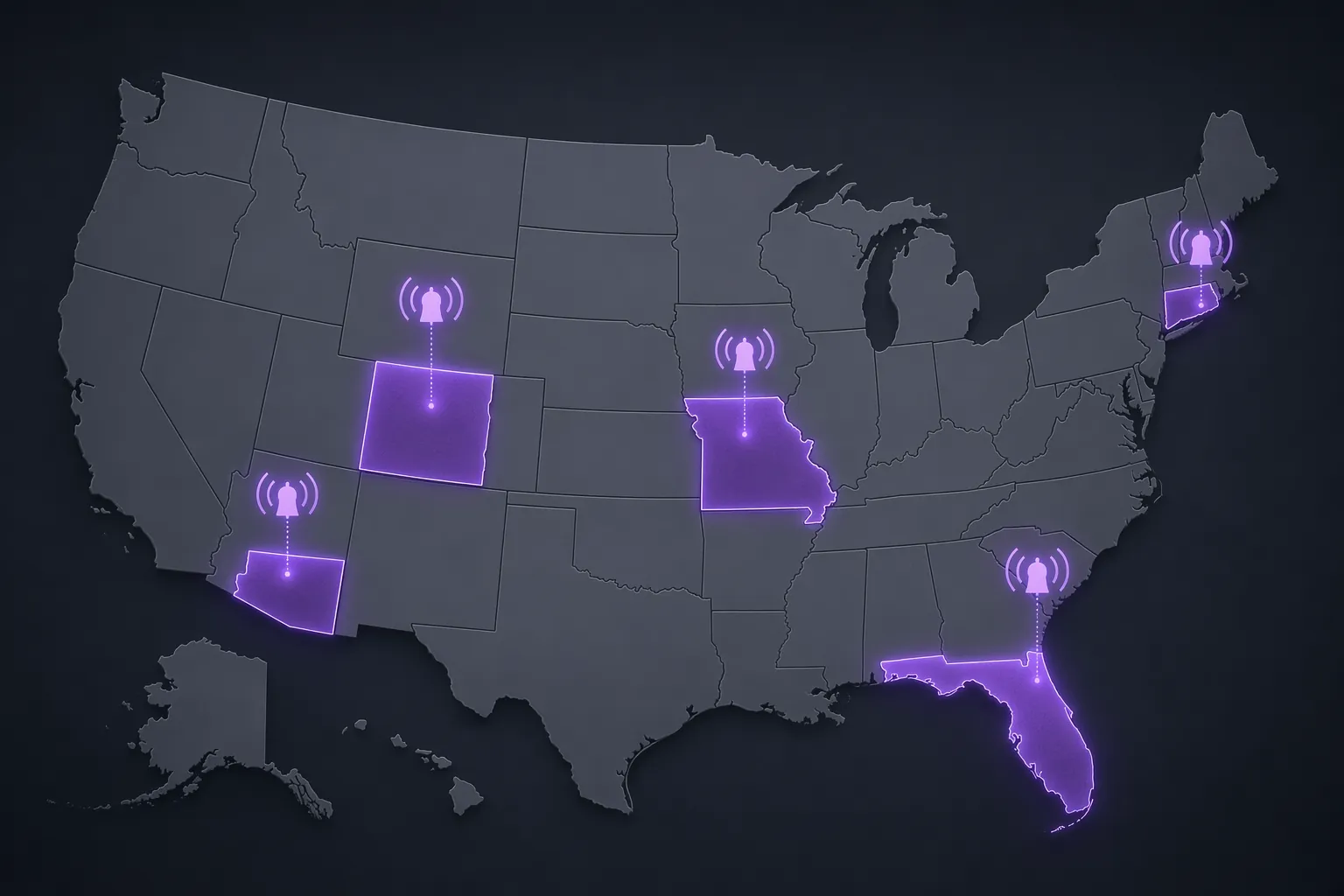
That narrower purpose matters because the United States already has better-known alert categories, but they do not line up cleanly with this population. AMBER Alert plans exist in all 50 states and the District of Columbia, but they are child-focused. Silver Alert plans exist in 37 states, but they generally grew around older adults, dementia, or Alzheimer’s-related disappearances. The Ashanti Alert Act of 2018 created a national framework for missing adults age 18 and older, but it does not by itself create a disability-specific Purple Alert mandate. As of July 2026, only six states have enacted Purple Alert systems: Florida, Maryland, Kansas, Mississippi, Connecticut, and Missouri.[1]
For families and first responders, the difference is not semantic. A missing-person protocol that says “adult” may still miss the practical issue: the person may not respond to their name, may flee from lights or sirens, may be unable to explain where they live, or may not recognize danger near traffic or water. If the alert category is written too broadly, the family has to translate the disability into a system that was not built around it. If it is written too narrowly, the dispatcher or local officer may have no usable route to escalate the case.
Where Purple Alert Fits Among Existing Missing-Person Alerts
The Purple Alert developmental disabilities system is best understood as a gap-filling tool, not a replacement for AMBER, Silver, or Ashanti Alerts. Those systems still matter, and in some cases they may be the correct channel. The problem is that their eligibility rules often depend on age, suspected abduction, or age-related cognitive decline, while many people with developmental disabilities do not fit those facts when they go missing.
| Alert type | Usual coverage emphasis | Why it may not solve the developmental-disability gap |
|---|---|---|
| AMBER Alert | Children, typically where abduction criteria are met | A child or young adult who wanders because of a developmental disability may not meet abduction-based criteria. |
| Silver Alert | Older adults or people with dementia or Alzheimer’s, depending on state law | A younger adult with an intellectual or developmental disability may be outside the intended population. |
| Ashanti Alert | Missing adults age 18 and older under a national framework created by the 2018 Ashanti Alert Act | It does not explicitly require disability-specific coverage in every state. |
| Purple Alert | People with intellectual, developmental, cognitive, or related disabilities, depending on state criteria | Coverage depends on state adoption and state definitions; there is no federal Purple Alert mandate as of July 2026. |
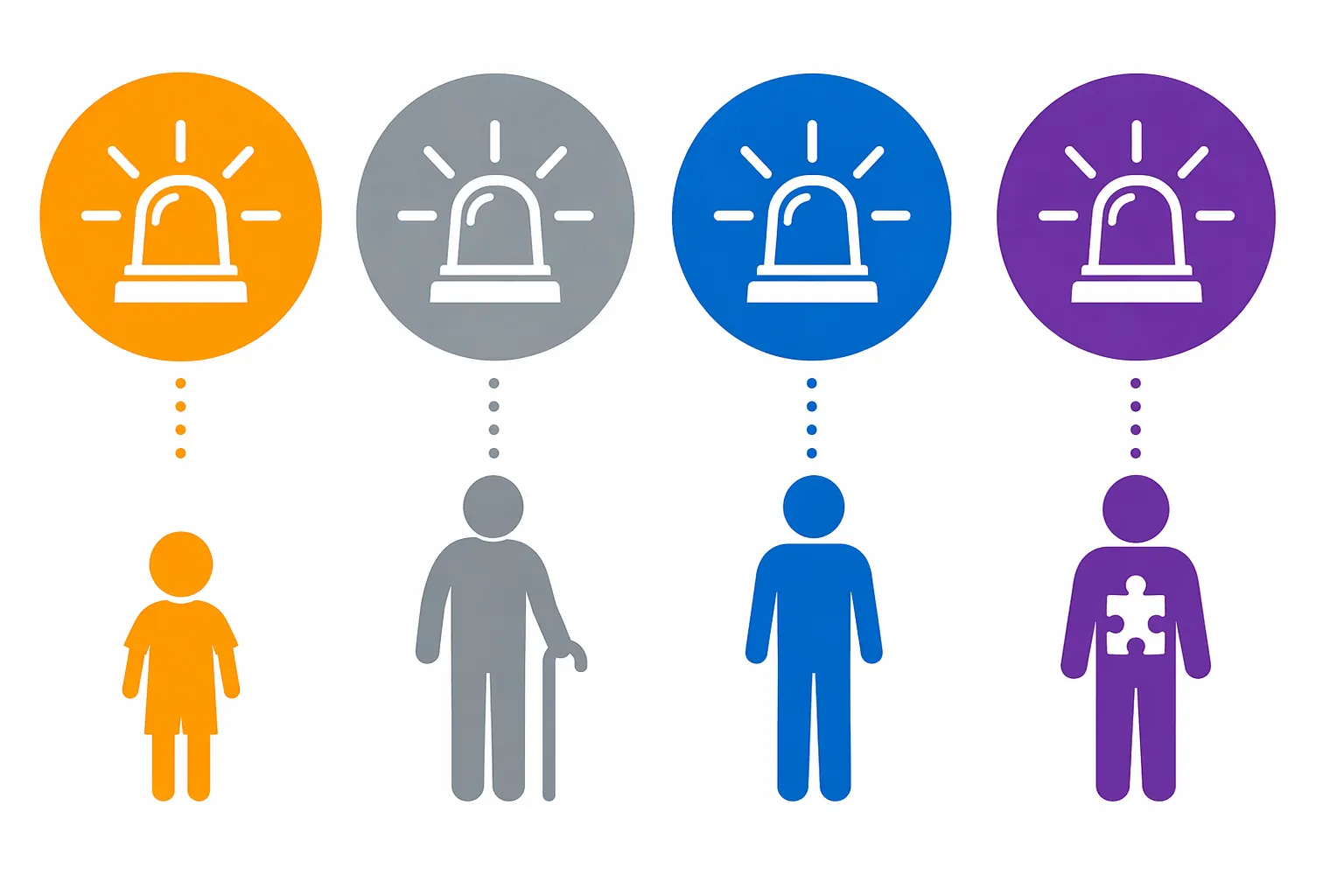
That is why the phrase “like AMBER, but for disabilities” is too loose. Purple Alert systems do not simply swap one population label for another. They have to decide who qualifies, whether age matters, whether dementia is included or excluded, which agency activates the alert, what evidence of danger is required, and whether the alert connects to tools that can help officers identify and communicate with the missing person.
Florida Gave the Policy Its First Working Shape
Florida created the first Purple Alert program in 2021, with operations beginning in 2022. The Florida Department of Law Enforcement activates the alert for missing adults age 18 or older who have an intellectual, developmental, or cognitive disability, when the person is missing and believed to be in danger. Florida’s model also draws a clear boundary: Alzheimer’s disease and dementia are excluded from Purple Alert because those cases are handled through the state’s Silver Alert system.[2]
That exclusion is not a minor drafting choice. It shows how Purple Alert depends on the rest of a state’s alert architecture. In Florida, a person with dementia is not left without a route simply because Purple Alert excludes dementia; the person is routed to Silver Alert. But the same wording would be more dangerous in a state where Silver Alert eligibility or local practice did not reliably cover the same person.
Florida’s program also makes the age issue visible. It covers adults. That is consistent with the most common way Purple Alert is discussed, but it leaves a separate question for minors with developmental disabilities who wander and are not believed to have been abducted. Some may fit other child-focused missing-person responses. Some may not. A family should not have to discover the distinction while standing at a counter or waiting for a call back.
How Activation Usually Works
The exact process varies by state, but the basic sequence is straightforward enough to matter for hospitals, group homes, schools, families, and local agencies that may be the first to notice someone is missing.
- Someone reports the person missing to law enforcement or the appropriate local authority.
- The responding agency evaluates whether the person meets the state’s Purple Alert eligibility criteria, including disability status, age if applicable, and indicators of danger.
- Law enforcement or a designated state agency activates the alert if the case qualifies.
- The alert is distributed through state channels, which may include law enforcement bulletins, public-facing notices, highway signs, media partners, or other state communication systems.
- Supporting tools, such as voluntary registries or responder kits, may help identify the missing person and guide a safer recovery.
The important word is “qualifies.” Purple Alert does not remove the need for judgment at activation. It gives that judgment a more suitable category. If the state law says the person must be an adult, a minor may be excluded. If the law excludes dementia, the case must move through another alert type. If danger must be shown, the reporting family may need to explain not just that the person is missing, but why the disappearance creates immediate risk.
Connecticut Shows What Implementation Looks Like After the Alert Exists
Connecticut’s Purple Alert, launched in May 2025, is useful because it shows the system after enactment, when agencies have to make it work outside a bill signing. In its first two weeks, Connecticut saw about 12 Purple Alert activations, an early signal that the category was not merely symbolic once available.[3]
The state’s approach also reaches beyond the alert blast itself. Connecticut’s Bring Me Home registry had about 430 registrants around the time of early implementation, giving families a voluntary way to provide information that can help first responders identify and support a missing person.[3] NBC Connecticut described the registry as a place where families can upload a photo and information for people who may be unable to communicate effectively with police or other responders.[4]
That kind of registry changes the texture of a recovery. A patrol officer who encounters someone alone at night may not know whether the person is lost, frightened, overstimulated, nonverbal, or simply refusing to engage. A current photo, caregiver contact, communication notes, or known triggers can shorten the distance between “unknown person located” and “safe handoff.” It also reduces the amount of explaining a family has to do during the worst minutes of the search.
Connecticut paired the alert environment with responder sensory bags containing items such as heavy blankets, noise-canceling headphones, and fidget tools.[5] Those items do not solve a missing-person case by themselves. Their value is more practical: they acknowledge that recovery can fail at the point of contact if the person becomes overwhelmed, bolts, or cannot process instructions in the way officers expect.
Connecticut also illustrates why state definitions cannot be assumed. Unlike Florida’s explicit dementia exclusion from Purple Alert, Connecticut’s materials describe coverage that can include younger adults with Alzheimer’s disease and brain trauma.[3] That does not make one model automatically superior. It does mean that “Purple Alert state” is not a complete answer. Eligibility still has to be read state by state.
Missouri’s No-Age Rule Exposes a Common Blind Spot
Missouri became the sixth Purple Alert state when Gov. Mike Kehoe signed RJ’s Law, HB 1840, on July 13, 2026. The law is scheduled to take effect on August 28, 2026.[6]
The distinctive feature is that Missouri’s Purple Alert has no age requirement. That design can cover minors with developmental disabilities who may not fit AMBER Alert criteria because the case is not an abduction. It also avoids the administrative oddity of telling a caregiver that a child’s disability-related wandering risk is real, but the disability-specific alert will not recognize the child until adulthood.[6]
This is where tidy national summaries tend to flatten the issue. Saying that Purple Alert protects adults with developmental disabilities is often accurate for a given state, and it reflects the way the system has been framed nationally. But Missouri’s approach shows that the policy choice is not inevitable. A state can decide that developmental-disability risk, rather than age, is the organizing fact.
Why the Eligibility Question Is Not Bureaucratic Trivia
The strongest argument for Purple Alert is not that every missing-person category needs its own color. It is that some disabilities create predictable search and recovery problems, and the existing categories do not always recognize them.
The National Center for Missing & Exploited Children says nearly half of children with autism elope. It also reported that in 2025 at least 98 children and young adults with autism were recovered deceased, with 88% of those deaths due to drowning.[7]
Those numbers should be handled carefully. They do not prove that a Purple Alert would have prevented each death, and they do not measure Purple Alert effectiveness. They do show why “missing” can become life-threatening quickly for people who wander toward water, traffic, woods, rail lines, or other hazards and may not seek help in expected ways.
For a caregiver, the alert category determines what happens next. A form asks for a diagnosis. A dispatcher asks whether there was an abduction. An officer asks whether the person is an adult. A state system asks whether dementia belongs in Purple Alert or Silver Alert. Each answer can move the case forward or sideways. The point of a disability-specific alert is to make those questions legible before the search clock is already running.
The Six-State Map Is Still Uneven
As of July 2026, enacted Purple Alert systems exist in Florida, Maryland, Kansas, Mississippi, Connecticut, and Missouri. That leaves 44 states without Purple Alert protection unless another alert category happens to fit the person’s circumstances.[6]
Several states have considered or are considering related legislation, including Rhode Island, Washington, and California, but pending bills are not operational coverage. Until enactment and implementation occur, a family in those states still depends on existing missing-person tools, local discretion, and whatever disability information can be communicated quickly to responders.
The unevenness is not only geographic. It is definitional. Florida excludes Alzheimer’s disease and dementia from Purple Alert and routes those cases through Silver Alert.[2] Connecticut’s system can include younger adults with Alzheimer’s disease and brain trauma.[3] Missouri removes the age floor.[6] These are not small footnotes for compliance teams or disability advocates. They determine whether a real person qualifies on the day they disappear.
Federal Legislation Would Not Yet Create a Finished National Purple Alert
The federal effort to watch in 2026 is the Enhanced Alerts for Missing Loved Ones with Disabilities Act, introduced as H.R. 9118 and S. 4670 on June 3, 2026. The proposal would amend Kristen’s Act to expand “health care needs” to include developmental disabilities, Alzheimer’s disease, and dementia.[8]
That is a meaningful move toward formalizing disability-related missing-person coverage in national alert infrastructure. It is not, as of July 2026, a completed federal Purple Alert system. The bill remains pending, and there is no national mandate requiring every state to operate a Purple Alert under one standard definition.[8]
The honest mid-2026 assessment is therefore narrower than the phrase “national Purple Alert” would suggest. Purple Alert is a targeted response to a real missing-person coverage gap. It is operational in six states. It is being tested in different forms: Florida’s adult-focused model, Connecticut’s alert-plus-registry-and-responder-tool environment, and Missouri’s no-age-requirement design. For everyone else, protection still depends on geography, definitions, and whether another alert category happens to fit before time runs out.
References
- National Ashanti Alert Network FAQs, National Ashanti Alert Network.
- 8 things to know about Florida's Purple Alert program, Herald-Tribune.
- Conn. Launches Purple Alerts for Intellectually Disabled Adults, GovTech.
- What are Purple Alerts and how do they work?, NBC Connecticut.
- Purple Alerts and the Importance of Sensory Bags, Enabling Devices.
- Missouri creates Purple Alert system for missing people with developmental disabilities, KY3.
- Autism & Wandering, National Center for Missing & Exploited Children.
- Alford Introduces Bill to Help Find Missing Loved Ones with Disabilities, Office of Rep. Mark Alford, June 3, 2026.
Comments
Join the discussion with an anonymous comment.